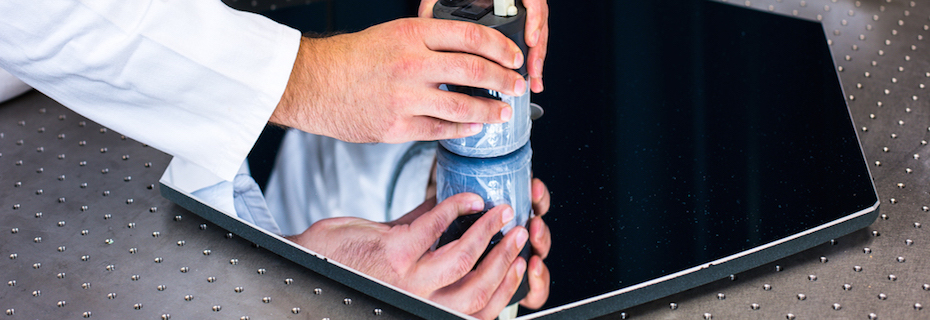
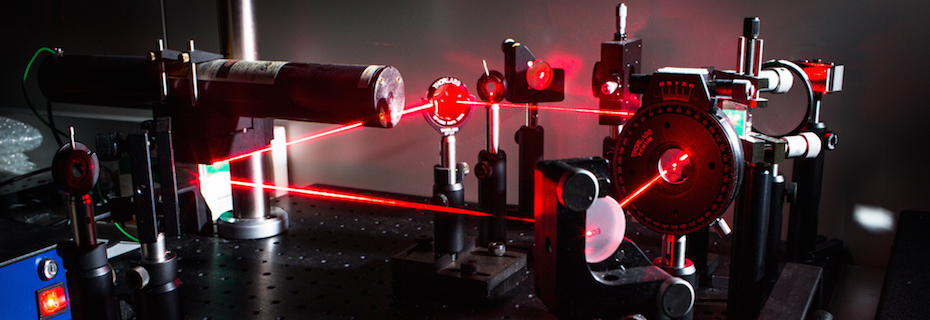
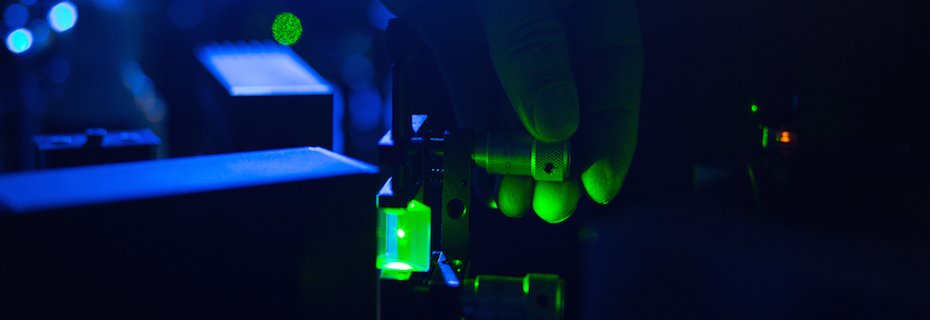
Maybe yes. A study published in Advanced Functional Materials highlights the crucial role of its naturally formed surface oxide layer in tungsten ditelluride (WTe₂). Researchers from the Institute of Physics of the Czech Academy of Sciences (FZU), together with colleagues from collaborating institutions, investigated how surface oxidation affects ferroelectric switching and memristor-like electrical behavior in WTe2.
Four Large-Sized Telescopes (LST) were inaugurated today in the Canary Islands. They stand at the Roque de los Muchachos Observatory on La Palma and form the core of the northern site of CTAO (Cherenkov Telescope Array Observatory), set to become the world’s largest observatory for detecting cosmic gamma rays.
Dear colleagues,we would like to invite you to the seminar of Division of Elementary Particle Physics of Institute of Physics, presented by Tomáš Sýkora (Faculty of mathematics and physics, Charles University).For more info, please see invitation.
The Working Group of Project and Financial Managers of the Czech Academy of Sciences organises a meeting called “JAKNAJAK Communication Platform” (Komunikační platforma JAKNAJAK) focusing on OP JAK projects. Representatives from the Ministry of Education, Youth, and Sports will also attend the meeting.
How can we see individual molecules? Tereza Roesel from the Dioscuri Center for Single-Molecule Optics at the Institute of Physics presented this topic in the FameLab finals—and won the Audience Award for her presentation. Following last year’s silver medal and a shared Audience Award at the Falling Walls competition, this is yet another accolade for the young scientist for popularizing science—and further proof that even seemingly abstract topics can be communicated in an entertaining and accessible way.
Dear colleagues,we would like to invite you to the seminar of Division of Elementary Particle Physics of Institute of Physics, presented by Jan Řídký (FZU).For more info, please see invitation.
We invite students, PhD candidates, and academic staff to a free webinar titled "How to get published with IOP Publishing".When: Tuesday, October 6, from 11:00 to 12:30Language: EnglishRegistration: https://register.gotowebinar.com/register/939163708330009691 (all registered participants will receive a recording)
On the last Friday of September, we opened the educational trail of the Czech Academy of Sciences’ Institutes in Ládví as part of Researchers' Night. Its interactive outdoor exhibits now show people walking by what scientists at the nearby institutes work on.
One year after the Surface Science Laboratory Station (SSLS) arrived at FZU from the Joint Research Centre (JRC) Karlsruhe, its core experimental capabilities are now operational. Transferred to FZU in October 2025 following a successful bid led by FZU in a JRC tender, the facility has since undergone extensive installation and commissioning, supported by four expert visits from JRC Karlsruhe.
Image
On September 22, Libor Šmejkal, Jairo Sinova, and Tomáš Jungwirth were awarded the 2026 Europhysics Prize by the European Physical Society for their outstanding contributions to condensed matter physics, specifically for their discovery of altermagnetism, the third fundamental class of magnetic order. All three laureates were affiliated with the Institute of Physics of the Czech Academy of Sciences at the time of their discoveries and the publication of their award-winning works. This is the first time that the EPS Europhysics Prize has been awarded to Czech scientists.
Want to combine an enjoyable evening with supporting a worthy cause? That’s exactly what this benefit concert will offer. It will take place on October 2 at 7:00 p.m. at the Municipal Theater in Kolín. This evening filled with music will also help students who want to expand their knowledge, experience, and horizons.
The fifth HR Coffee & Talk took place at Slovanka and Cukrovarnická. Over the course of the afternoon, staff could ask about courses, grants and outreach. They also left with contacts for colleagues from other departments.
Researchers Dr. Benjamin Lowe and Dr. Oleksandr Stetsovych from FZU have built a QR code more than 1000 times smaller than the width of a human hair and nearly 800 times smaller than the current Guiness World Record holder.
Stránky