
The ALICE, ATLAS, CMS and LHCb collaborations at CERN’s Large Hadron Collider (LHC) have been awarded the Breakthrough Prize in Fundamental Physics by the Breakthrough Prize Foundation. The award was presented on 5 April 2025 in Los Angeles and recognises scientific results based on LHC Run-2 data collected up to July 2024. It honours the collective work of thousands of scientists from more than 70 countries, represented at the ceremony by the spokespersons who led the collaborations during this period.
The prize was thus also awarded to researchers from the Joint Laboratory of Optics, namely Prof. M. Hrabovský, Dr. Karel Černý, Dr. Jiří Kvita, and Assoc. Prof. Libor Nožka and Dr. Petr Hamal and Dr. Radek Přívara.
"This prize recognises the collective vision and monumental effort of thousands of ATLAS collaborators worldwide", says ATLAS spokesperson Stephane Willocq. "Their talent and dedication, and the support of our public funding agencies, enabled the scientific breakthroughs that are being celebrated today. These results have transformed our understanding of the Universe at the most fundamental level.
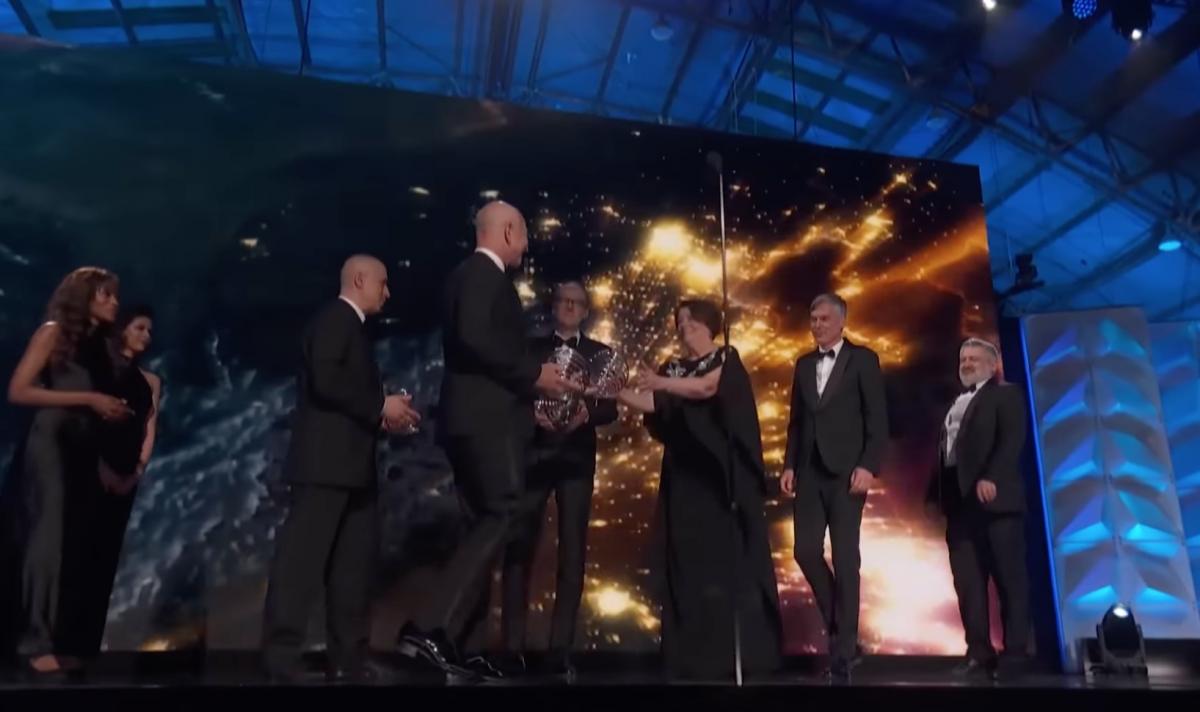
Representatives of the CERN LHC collaborations receive the 2025 Breathrough Prize from the hands of Yuri Milner and Jeff Bezos.
The prize acknowledges the experiments’ outstanding contributions to fundamental physics, including precise measurements of the Higgs boson that confirm the mechanism of mass generation, the discovery of new strongly interacting particles, detailed studies of rare processes and matter–antimatter asymmetry, and the exploration of matter under the most extreme conditions achievable in the laboratory. CERN Director-General Fabiola Gianotti described the award as a powerful recognition of the dedication, expertise and global cooperation that drive advances at the frontiers of human knowledge.
The $3 million prize will be donated to the CERN & Society Foundation and used to fund research grants for doctoral students from member institutes, enabling them to gain hands-on experience at CERN and transfer cutting-edge expertise back to their home countries. ATLAS and CMS, as general-purpose experiments, continue to study the Higgs boson and a broad range of high-energy phenomena. ALICE focuses on the quark–gluon plasma that filled the early Universe, while LHCb investigates subtle differences between matter and antimatter and the properties of heavy-quark particles. Together, these experiments have pushed fundamental physics to unprecedented precision and will extend this legacy with the future High-Luminosity LHC upgrade planned to begin in 2030.
References:
The LHC experiment collaborations at CERN receive Breakthrough Prize
The whole ceremonyl here at Youtube.
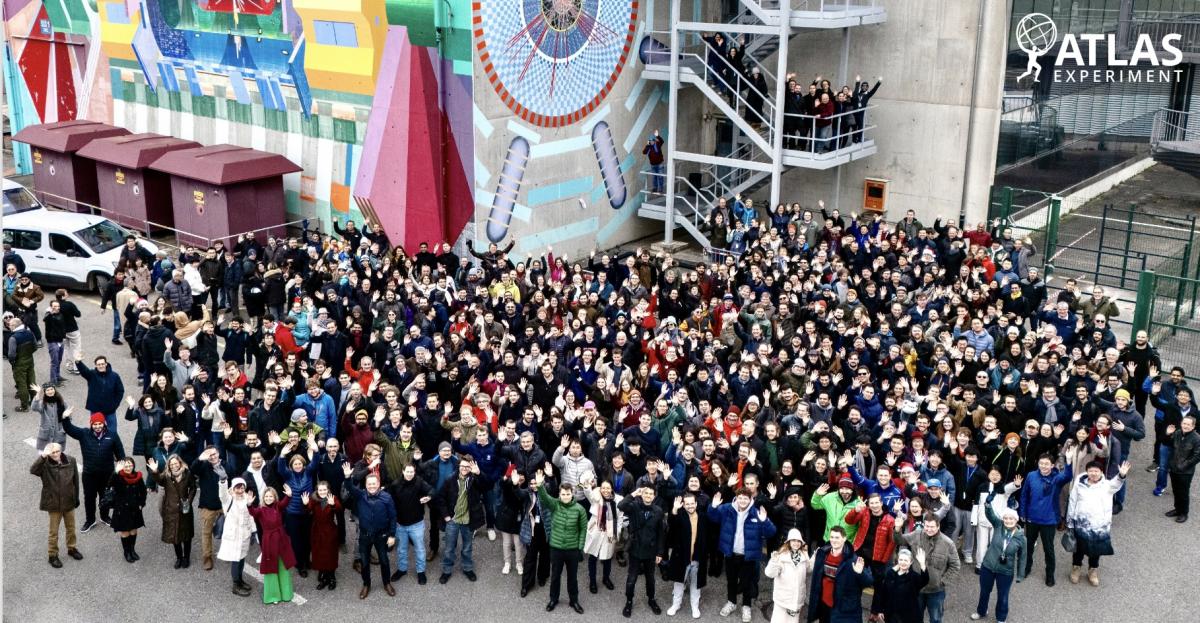
CERN-ATLAS Collaborations.