


 The Czech Republic is developing a quantum communication network. It can now rely on a complete backbone quantum network connecting Prague, Brno, and Ostrava, enabling the transmission of cryptographic keys based on the principles of quantum cryptography. This will allow secure communications for government institutions, banks, and private entities despite the growing risks associated with the increasing capabilities of quantum computers.
The results of the pilot operation of the quantum communication network were presented on April 14, 2026, during the official launch of the Czech Quantum Communication Infrastructure (CZQCI) project. The event was attended by representatives of the European Union, international consortia, public administration, research institutions, and industry. Representing the Joint Laboratory of Optics were Jan Soubusta, CZQCI project coordinator at Palacký University, and Ondřej Haderka, head of the Joint Laboratory of Optics.
The CZQCI project is part of the pan-European EuroQCI initiative, which aims to build a secure communication infrastructure based on quantum technologies. In the coming years, a comprehensive communication network is expected to connect institutions of national states and the European Union, critical infrastructure, and selected private entities. The launch of the Czech national backbone network represents the first step for the country. The initiative involves a broad consortium of academic and research organizations, communication infrastructure providers, and partners from public administration, armed forces, and cybersecurity.
The development of the quantum network in the Czech Republic is coordinated by CyberSecurityHub, an expert cybersecurity organization founded by Masaryk University, Brno University of Technology, and the Czech Technical University in Prague. CyberSecurityHub provides key expertise, connects stakeholders, and ensures alignment with European initiatives.
“Building quantum communication infrastructure is a long-term and complex process that requires close cooperation across academia, research organizations, public administration, and industry. CZQCI forms the technological foundation for secure communication of the future and serves as a platform for educating a new generation of experts in quantum technologies. The newly developed know-how and technical expertise of the teams involved are crucial,” said CZQCI project coordinator Jan Bouda.
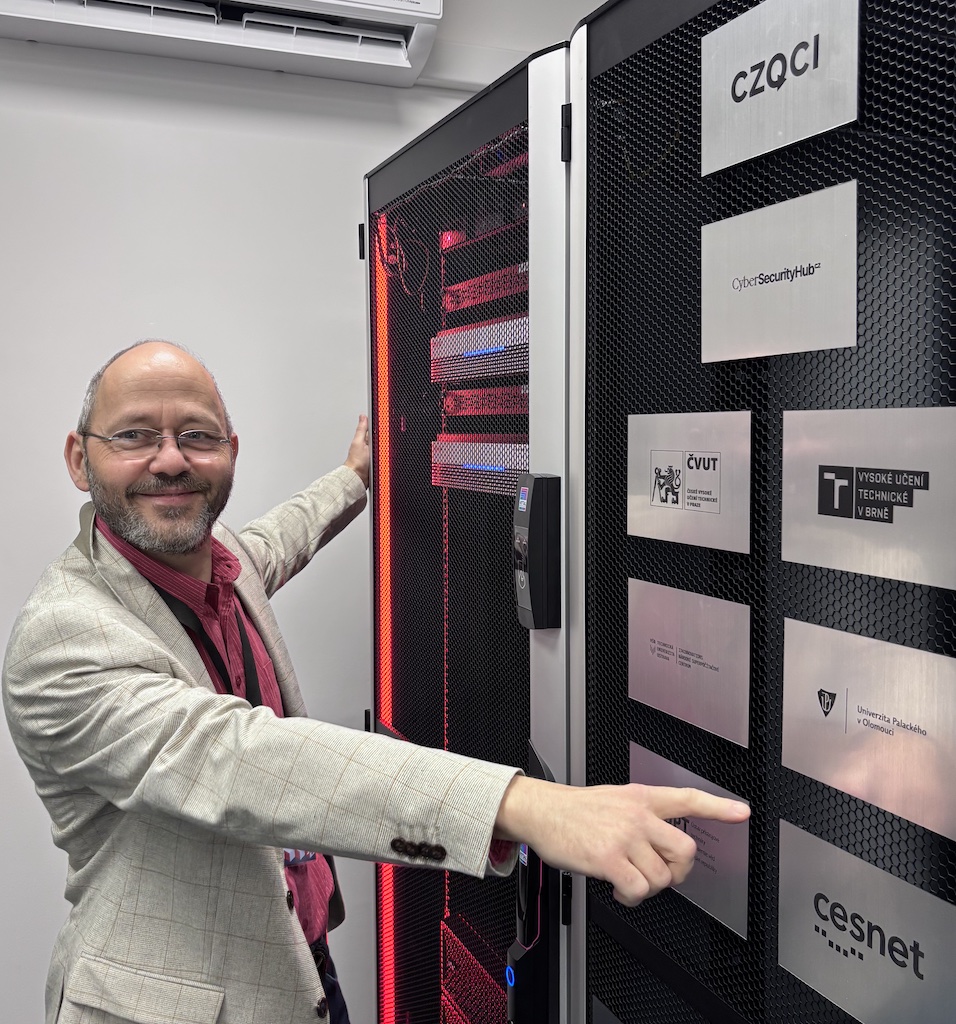
The project is being implemented by a broad consortium of partners, including CESNET, the Czech Technical University in Prague, the Institute of Scientific Instruments of the Czech Academy of Sciences, Brno University of Technology, VSB – Technical University of Ostrava, and the Faculty of Science of Palacký University.
Optics research workplaces in Olomouc—the Joint Laboratory of Optics of Palacký University and the Institute of Physics of the Czech Academy of Sciences, and the Department of Optics at the Faculty of Science, Palacký University—have long-standing experience in quantum cryptography. The first quantum cryptographic system in Olomouc was built jointly by these institutions as early as 1997, and an original protocol for quantum mutual identification was implemented on it two years later.
“We began working on quantum cryptography in the second half of the 1990s on the initiative of Professor Jan Peřina, the founder and leading figure of the Olomouc school of quantum optics. At that time, we were among a small number of laboratories worldwide capable of experimentally implementing a quantum cryptographic system,” recalls Ondřej Haderka, a member of the original Olomouc quantum cryptography team. “We continued related research in areas such as quantum random number generators and quantum entanglement in the years that followed,” adds Jan Soubusta.
The role of the Olomouc team in the project includes both knowledge sharing and the preparation of educational courses for technicians and cryptologists who will work with quantum networks. “We have been involved, and continue to be involved, in defining technical requirements for procurement procedures for quantum key distribution devices, as well as in selecting protocols and encoding methods,” added Miloslav Dušek from the Department of Optics.
One of the so-called trusted nodes of the backbone quantum network has also been established in Olomouc.
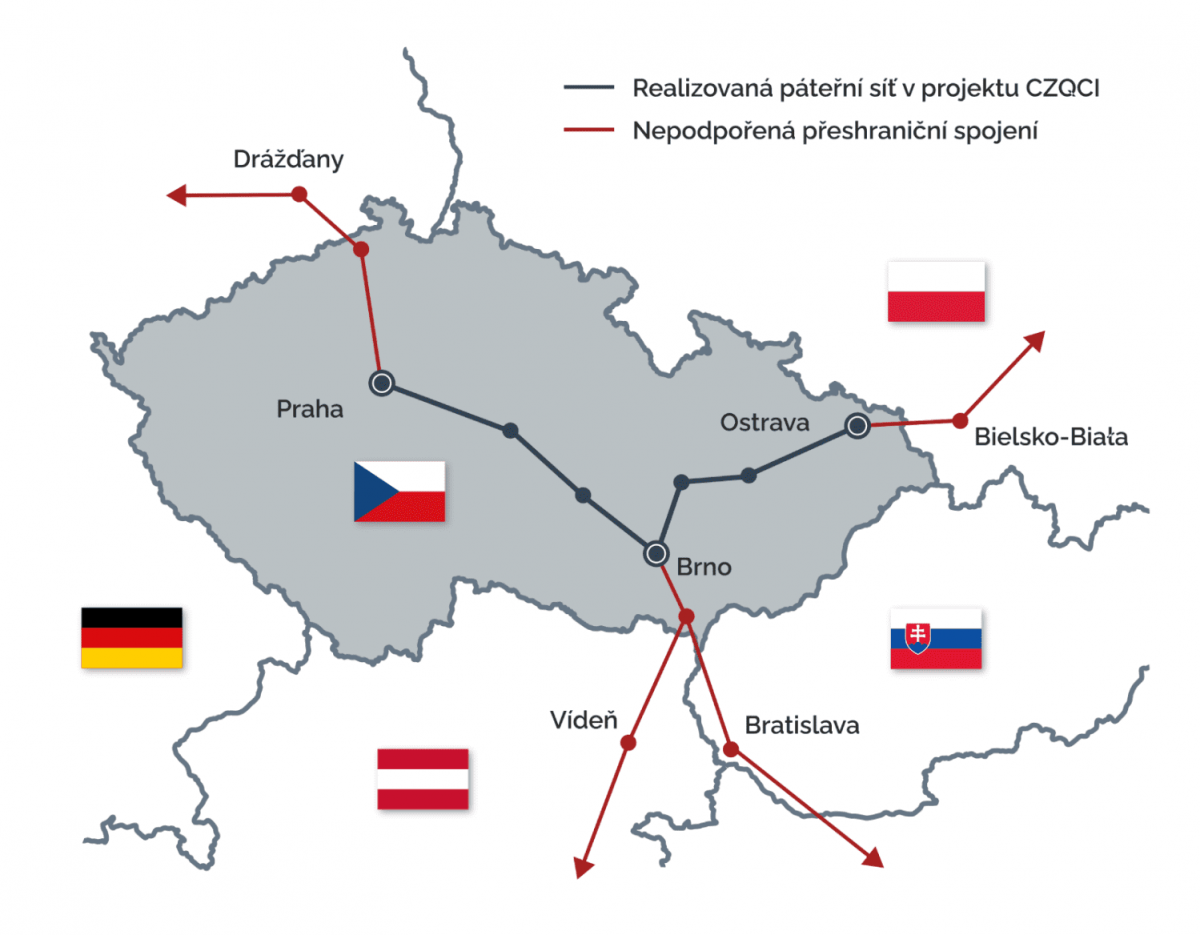
Map of the backbone quantum network CZQCI.